Anchor text optimization is the practice of analyzing and improving the clickable text within hyperlinks to strengthen a site's link structure, increase topical relevance, and avoid patterns that search engines may flag as manipulative. For SEO specialists and link builders, this discipline sits at the intersection of on-page SEO and off-page authority building.
Getting it wrong means risking algorithmic penalties or, at the very least, leaving ranking potential on the table. Getting it right means your link profile looks natural, your pages receive contextually appropriate signals, and your overall domain authority grows steadily. Anchor text optimization isn't a one-time audit; it's a continuous process of monitoring, adjusting, and diversifying.
The stakes are real: Google's Penguin algorithm update specifically targeted over-optimized and repetitive anchor text, and its effects are now baked into the core algorithm. If you're building links without paying attention to the words inside them, you're operating blind.
Key Takeaways
- Diversified anchor text profiles look natural to search engines and reduce penalty risk significantly.
- Exact-match anchors should represent a small fraction of your total link profile.
- Anchor text relevance matters more than volume when passing topical authority between pages.
- Regular audits catch repetitive anchor text patterns before they trigger algorithmic filters.
- Internal linking patterns deserve the same strategic attention you give to external backlinks.
What Is Anchor Text Optimization and How Does It Work?
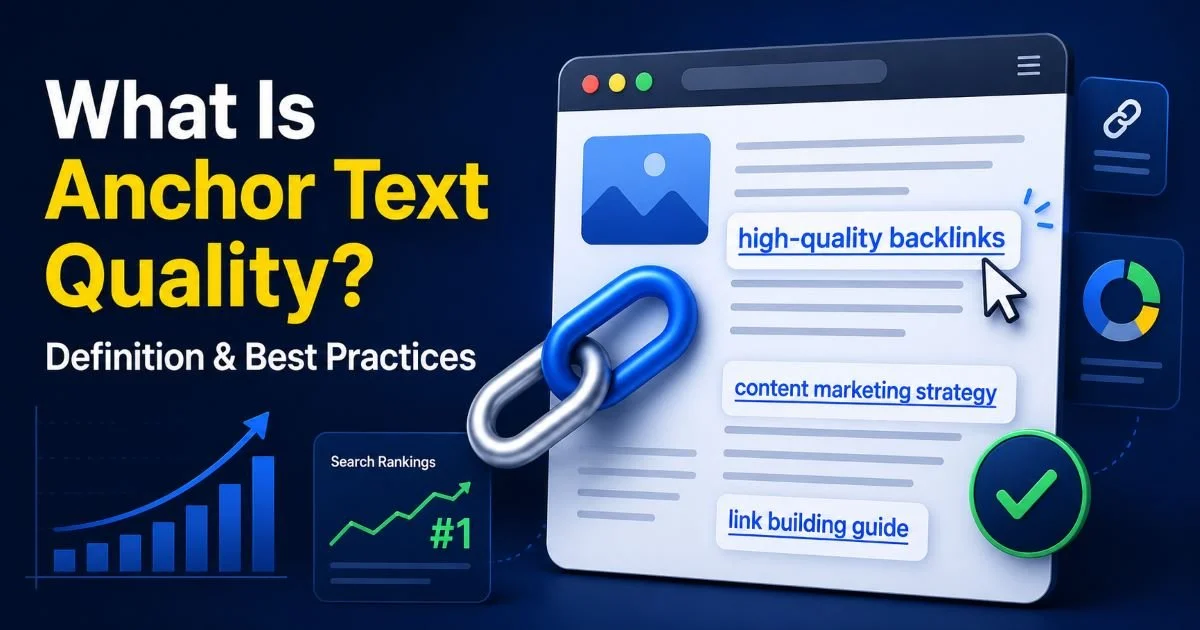
At its core, anchor text optimization involves selecting, monitoring, and diversifying the visible text used in hyperlinks pointing to (and within) your website. Search engines use this text as a contextual signal to understand what the linked page is about. When a hundred links point to your page with the anchor "best running shoes," Google interprets that page as highly relevant to that phrase. The mechanism is straightforward, but the strategy behind it requires nuance and ongoing attention to detail.
Types of Anchor Text
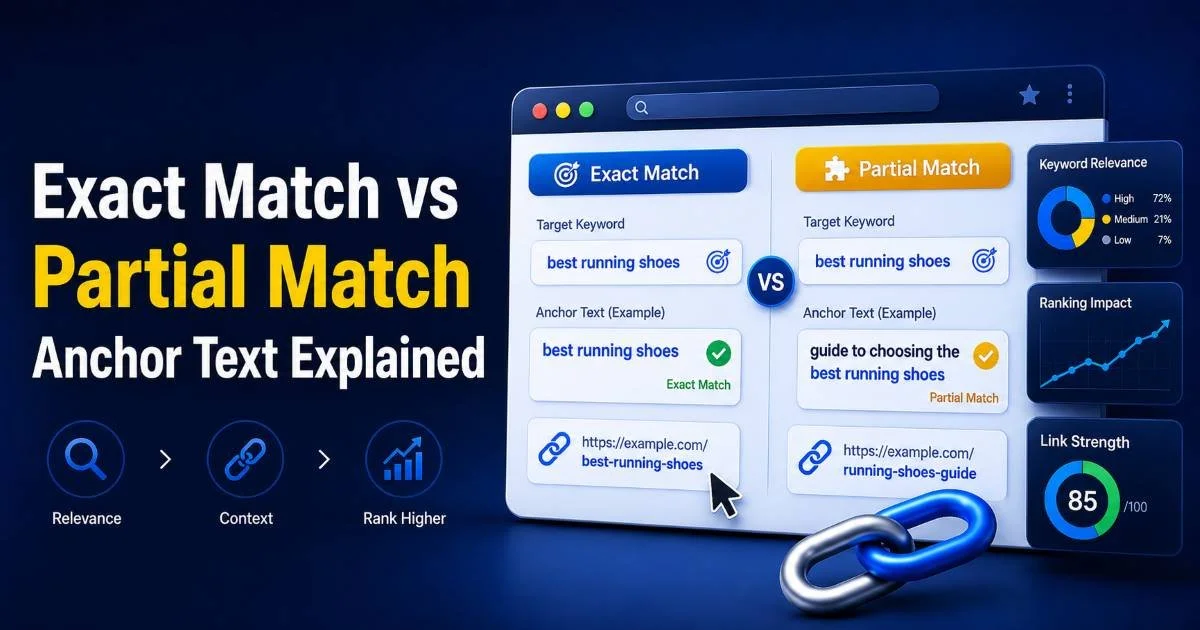
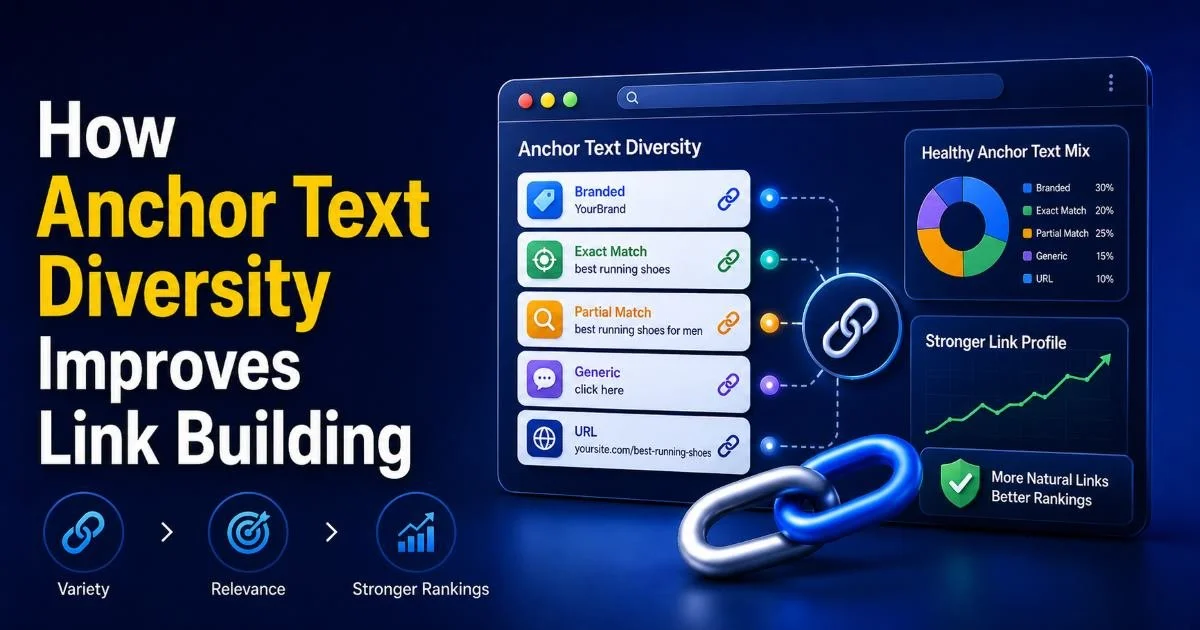
Understanding the different categories of anchor text is foundational. Exact-match anchors use the precise target keyword. Partial-match anchors include the keyword alongside other words. Branded anchors use your company or site name. Generic anchors are phrases like "click here" or "learn more." Naked URLs display the raw web address. Each type serves a different purpose in your overall profile. A thorough breakdown of the six types of anchor text shows how each category contributes to a balanced link profile.
How Search Engines Interpret Anchors
Google's original PageRank patent explicitly referenced anchor text as a ranking signal. The algorithm treats the clickable text as a third-party endorsement of what the destination page covers. When this signal is consistent and natural, it reinforces topical authority. When it's artificially concentrated on a single phrase, it looks like manipulation. The Penguin update, first launched in 2012 and integrated into the core algorithm by 2016, was designed specifically to detect and penalize these unnatural patterns.
Why Anchor Text Variety Matters for Link Building
A healthy link-building strategy demands anchor text variety because real, organic link profiles are inherently diverse. When a blogger mentions your product, they might link using your brand name. When a journalist references your study, they might use a descriptive phrase. When a forum user shares your page, they probably paste the raw URL. This natural diversity is exactly what Google expects to see. A profile dominated by a single anchor type, especially exact-match, sends a clear signal that the links were built rather than earned.
Consider two hypothetical e-commerce sites selling hiking boots. Site A has 200 backlinks, and 150 of them use the anchor "best hiking boots." Site B also has 200 backlinks, but the anchors include brand mentions, product names, descriptive phrases, and naked URLs spread across a realistic distribution. Site B will almost certainly outperform Site A because its profile mirrors what organic linking looks like. Anchor text relevance still matters — you want contextually appropriate text, but forced uniformity actively hurts you.
"A link profile that looks manufactured will eventually perform like one — poorly."
The Risk of Repetitive Anchor Text
Repetitive anchor text is one of the clearest footprints of artificial link building. When Google detects that an unusually high percentage of your backlinks share the same anchor, it can suppress your rankings for that exact term or, in severe cases, devalue your entire link profile. The irony is painful: the keyword you tried to force-rank for becomes the keyword you lose visibility on. Recovery requires disavowing toxic links and rebuilding with a diversified approach, which takes months. Prevention is far simpler and far cheaper than recovery.
If more than 15-20% of your backlinks use the same exact-match anchor, you may already be at risk of algorithmic suppression.
Internal linking patterns carry similar risks, though the consequences are typically less severe. Over-optimizing internal anchors can still confuse Google about which page should rank for a given term, creating keyword cannibalization issues. Smart internal linking uses varied, descriptive anchors that help both users and crawlers understand the relationship between pages without hammering the same phrase repeatedly.
How to Analyze and Improve Your Anchor Text Profile
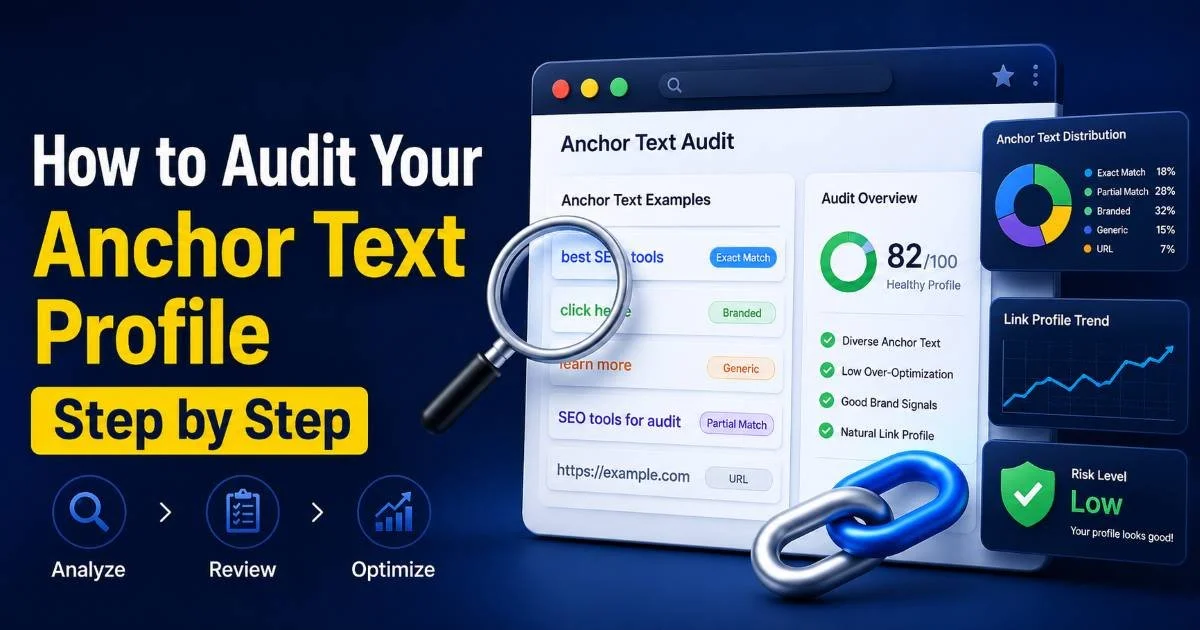
Start by exporting your complete backlink profile from a tool like Ahrefs, Semrush, or Moz. Group your anchors into categories: exact-match, partial-match, branded, generic, naked URL, and miscellaneous. Calculate the percentage distribution across these groups. Flag any anchor that appears more than 5% of the time as a potential risk area. This initial audit gives you a clear picture of where you stand and where you need to intervene. You can also use specialized anchor analysis tools to streamline this process and identify patterns at scale.
Building a Distribution Framework
Once you've completed your audit, build a target distribution framework that guides future link-building efforts. Most SEO specialists aim for branded anchors to represent 30-40% of their profile, with partial-match at 20-30%, generic at 10-15%, naked URLs at 10-15%, and exact-match kept below 10%. These ranges aren't rigid rules; they're guidelines derived from studying the profiles of top-ranking pages across competitive niches. Your specific targets should reflect what's normal in your vertical.
Document every link you build going forward with its anchor text and category. This running log becomes your strategic compass, showing you at a glance whether your next batch of outreach emails should target branded mentions, contextual descriptions, or something else entirely. A detailed guide to anchor text types and their applications can help you refine these categories further. The goal is never to leave anchor selection to chance; it should be a deliberate, data-informed decision every single time.
Create a shared spreadsheet that tracks anchor text, link source, category, and date acquired. Review it monthly to catch emerging patterns before they become problems.
Common Misconceptions About Anchor Text
The most persistent myth is that exact-match anchors are the fastest path to ranking. They were in 2010. Today, an over-reliance on exact-match anchors is the fastest path to a penalty. Many link builders, especially those new to the field, still operate under outdated assumptions. The reality is that Google's natural language processing has become sophisticated enough to understand topical relevance from partial matches and even semantically related anchors. You don't need the exact keyword in every link to rank for it.
Another common misconception is that anchor text only matters for external links. Internal linking patterns play a significant role in how Google discovers, crawls, and understands your site architecture. If every internal link to your pricing page uses the anchor "affordable pricing," you're sending a narrower signal than if you varied it with "see our plans," "pricing details," and "compare packages." Internal anchor text optimization is lower stakes than external, but it still compounds over time and affects how effectively your pages get indexed and ranked.
Google's John Mueller has confirmed that internal anchor text helps Google understand page context, but over-optimization can look spammy even for internal links.
A third misconception is that nofollow links don't require anchor text attention. While nofollow links traditionally didn't pass PageRank, Google now treats nofollow, sponsored, and UGC attributes as hints rather than directives. This means the anchor text in nofollow links may still influence how Google perceives your page's topical relevance. Ignoring these links in your anchor text analysis leaves a blind spot in your overall strategy that competitors who pay attention will exploit.
Finally, some practitioners believe that anchor text optimization is a set-it-and-forget-it task. Your link profile is a living dataset. Competitors build links that change the landscape. Pages get updated, redirected, or removed. New links accumulate with anchors you didn't choose. Quarterly audits are the minimum frequency for maintaining a clean, effective profile. Top-performing SEO teams review their anchor distributions monthly and adjust their outreach strategies accordingly to maintain healthy anchor text variety across every target page.
Frequently Asked Questions
?How often should I audit my anchor text profile for repetitive patterns?
?How does branded anchor text differ from exact-match in terms of penalty risk?
?How long does it take to recover if repetitive anchor text triggers an algorithmic filter?
?Is it a mistake to focus anchor text optimization only on external backlinks?
Final Thoughts
Anchor text optimization is not about gaming search engines; it's about communicating clearly with them. A well-diversified anchor profile tells Google what your pages are about without screaming it in a way that triggers suspicion.
The discipline requires consistent auditing, strategic planning, and the willingness to resist shortcuts. Treat every anchor text decision as a small but meaningful investment in your site's long-term authority, and the compounding returns will speak for themselves.
Disclaimer: Portions of this content may have been generated using AI tools to enhance clarity and brevity. While reviewed by a human, independent verification is encouraged.