Anchor text optimization sits at the heart of every effective link-building strategy, yet many SEO specialists overlook one of its most powerful dimensions: diversity. When your link profile shows the same anchor phrases repeated across dozens of backlinks, search engines notice and it's not in the way you want.
A monotonous anchor text pattern signals manipulation, while a varied distribution mirrors the organic linking behavior that Google rewards. Understanding how to define and apply anchor text quality best practices is the foundation, but executing diversity at scale requires deliberate planning. This guide walks you through four actionable steps to diversify your anchors, strengthen your link profile, and protect your site from algorithmic penalties.
Whether you're managing a single domain or dozens of client campaigns, these techniques will sharpen your SEO audit process and produce measurable ranking improvements.
Key Takeaways
- Anchor text diversity reduces over-optimization risk and protects rankings from algorithmic penalties.
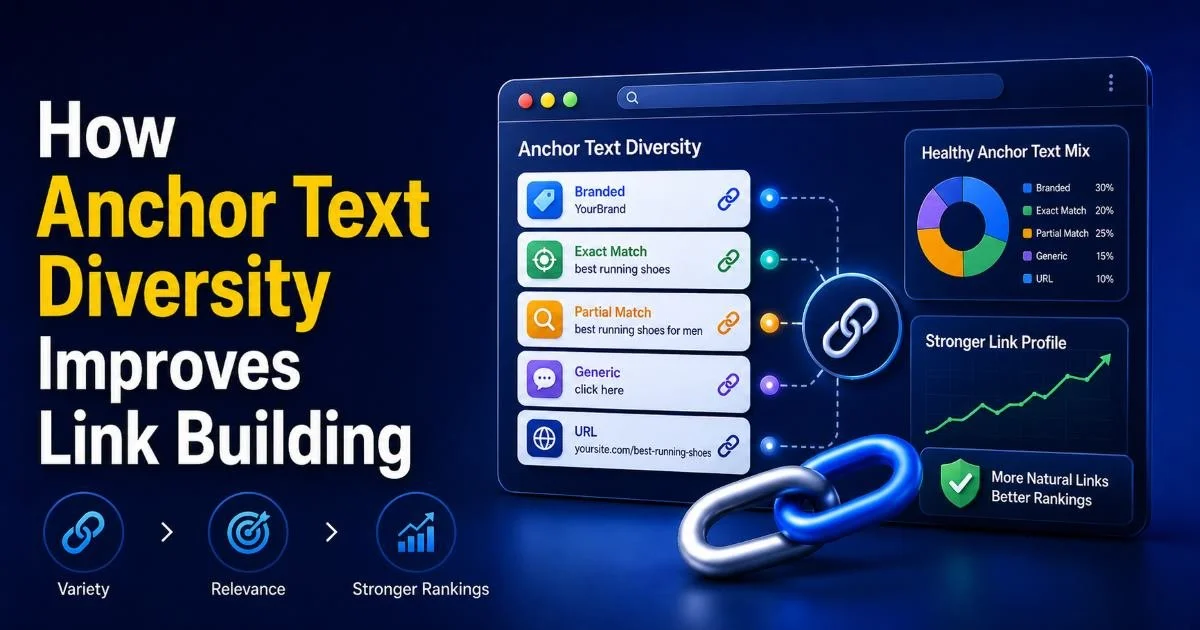
- A healthy link profile mixes branded, naked URL, generic, and keyword-rich anchors naturally.
- Regular audits reveal dangerous concentration patterns before they trigger manual actions.
- Partial match anchors outperform exact match anchors for sustainable, long-term ranking gains.
- Mapping anchor types to funnel stages improves both relevance and conversion potential.
Step 1: Audit Your Current Anchor Text Distribution
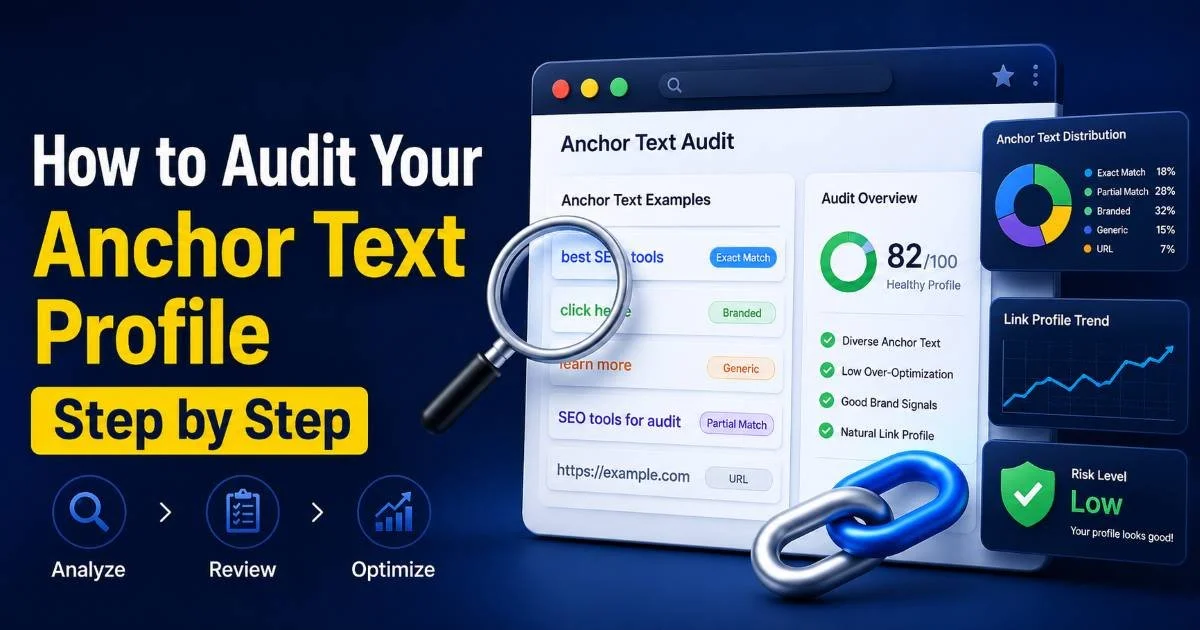
Before you can improve diversity, you need to see what you're working with. Export your full backlink profile from tools like Ahrefs, Semrush, or Majestic and categorize every anchor into types: exact match, partial match, branded, naked URL, generic (like "click here"), and image alt text. This classification reveals where your distribution is healthy and where it's dangerously skewed. If you've never done this before, follow a structured process to audit your anchor text profile step by step so you don't miss critical data points.
Identifying Concentration Risks
Look for any single anchor phrase that accounts for more than 5-8% of your total backlinks to a given page. When one exact match keyword dominates your profile, Google's Penguin algorithm interprets this as unnatural link manipulation. The risk compounds when those links come from low-authority or irrelevant domains. A site selling project management software with 40% of its anchors reading "best project management tool" is practically waving a red flag at Google's spam team.
Pay special attention to pages that have recently dropped in rankings. Often, the culprit isn't weak content or poor technical SEO, it's an anchor text profile that's become lopsided over time through aggressive outreach campaigns. Cross-reference your anchor data with ranking fluctuation timelines to identify correlations. This diagnostic step alone can save months of misdirected optimization effort.
Create a spreadsheet tagging each backlink's anchor type, referring domain authority, and topical relevance for a complete picture.
Step 2: Define Your Ideal Anchor Text Ratio
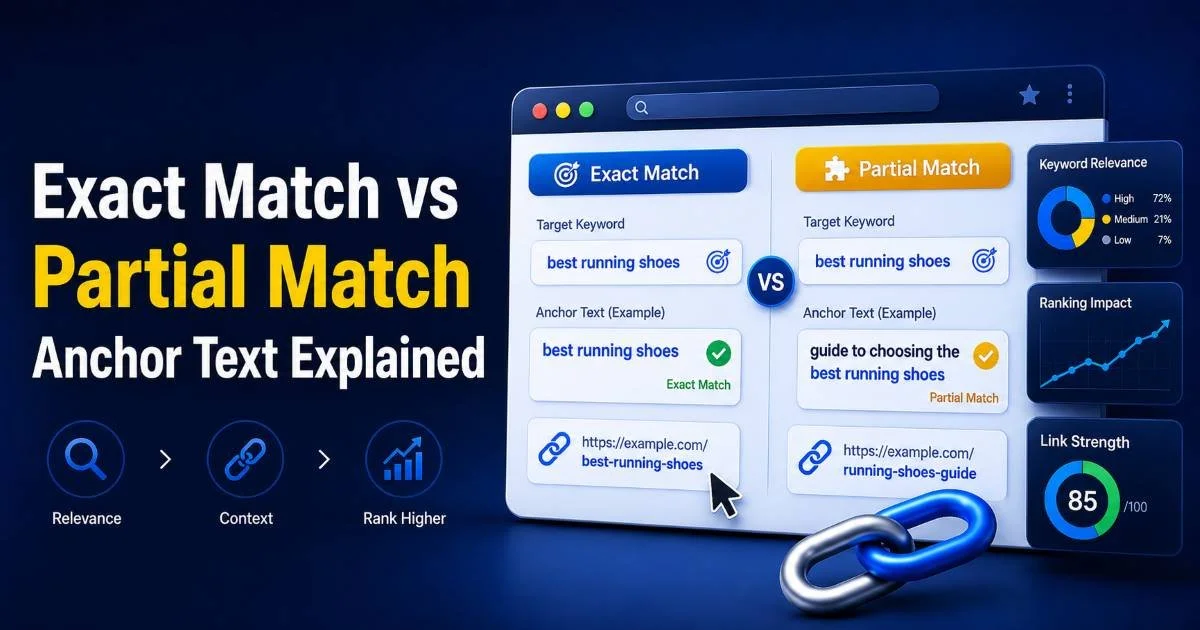
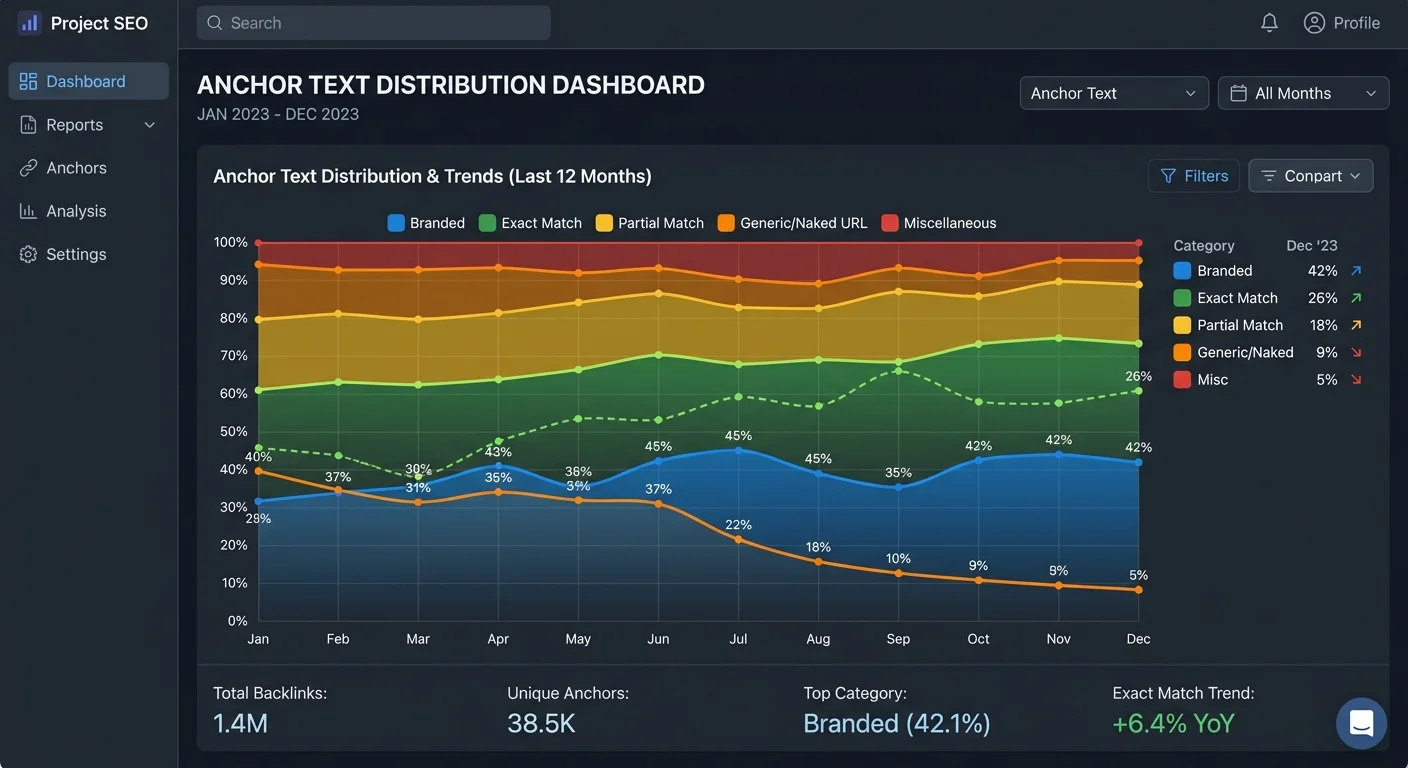
There's no universal formula for the perfect anchor text ratio, but data from large-scale studies gives us a reliable starting framework. High-ranking pages across competitive niches tend to share similar distribution patterns, with branded and naked URL anchors making up the majority. The distinction between exact match and partial match anchor text matters enormously here, partial match variations signal relevance without triggering over-optimization filters. Your goal is to model what organic linking naturally produces.
Benchmarking Against Competitors
Pull the anchor text profiles of the top five ranking pages for your target keyword and calculate their distribution percentages. This competitive benchmarking reveals what Google already considers acceptable in your specific niche. A finance keyword might tolerate different ratios than a recipe keyword because the linking ecosystems differ dramatically. Don't copy competitors exactly; use their profiles as guardrails while maintaining your own natural variation.
Once you've gathered competitive data, build a target ratio document for each primary landing page on your site. Set acceptable ranges rather than hard targets: for instance, branded anchors between 30-40%, naked URLs between 20-30%, and exact match keywords capped firmly at 3-8%. This range-based approach gives your outreach team flexibility while preventing dangerous overconcentration in any single category. Revisit these targets quarterly as your link profile grows and competitive landscapes shift.
Newer sites should lean even more heavily toward branded and URL anchors — keyword-rich anchors look suspicious on domains with thin link profiles.
| Anchor Type | Example | Target Range | Risk Level |
|---|---|---|---|
| Branded | "Anchor Tool" | 30–40% | Low |
| Naked URL | "anchortool.dev" | 20–30% | Low |
| Generic | "read more," "this resource" | 15–20% | Low |
| Partial Match | "anchor text analysis tool" | 10–15% | Medium |
| Exact Match | "anchor text optimization" | 3–8% | High |
| Long-Tail / Topical | "how to diversify link anchors" | 5–10% | Low |
Step 3: Implement Diversity Across Link Building Campaigns
Knowing the ideal ratio is useless without a system to execute it during active outreach. Start by creating an anchor text playbook, a shared document listing approved anchor variations for each target page. Include at least 15-20 distinct phrases per page, covering every anchor type. When your team requests or negotiates a backlink, they select from this pre-approved list based on what's currently underrepresented. This prevents the common pattern where link builders default to the same keyword phrase in every pitch email.
Matching Anchors to Content Context
The surrounding content dictates which anchor type will look most natural. A guest post about industry trends calls for a branded or topical anchor, while a resource page listing tools might naturally use a partial match keyword. Forcing an exact match anchor into an unrelated paragraph creates a jarring reading experience that both users and search engines recognize as artificial. When working with white-hat link building services, insist that anchor selection accounts for the editorial context of each placement.
"The best anchor text reads as though the linking author chose it themselves — because ideally, they did."
Build variation at the sentence level too. Instead of always linking the keyword phrase, try linking a longer clause that contains the keyword naturally. For example, rather than anchoring on "link building SEO," use "strategies that improve link building for SEO-focused campaigns." These longer, more natural anchors dilute keyword density while maintaining topical relevance. They also perform well in SERP features where Google evaluates the surrounding context of inbound links. The approach aligns perfectly with how to build a natural anchor text strategy for backlinks that withstands algorithm updates.
Never let automated tools or templates generate your anchor text — patterns from templated outreach are trivially detectable by Google's algorithms.
Step 4: Monitor and Adjust Your Anchor Text Strategy Over Time
An anchor text strategy isn't something you set and forget. Your link profile changes with every new backlink acquired, every link lost to domain expiration, and every disavow action you take. Schedule monthly reviews where you re-export your backlink data and recalculate anchor distribution percentages. Compare these against your target ranges established in Step 2. Small drifts are normal and expected; significant swings require immediate corrective action in your next outreach cycle.
Building Feedback Loops
Connect your anchor text monitoring to ranking performance data. When a page gains positions, note what anchor types were added in the preceding weeks. When rankings dip, check whether new backlinks carried problematic anchors. Over six to twelve months, these correlations build a remarkably accurate picture of what your specific domain can tolerate. This feedback loop transforms your SEO audit from a reactive diagnostic into a predictive tool that guides proactive campaign decisions.
Track unlinked brand mentions as opportunities to naturally expand your branded anchor percentage without any outreach overhead. Tools like Google Alerts, Brand24, or Ahrefs' content explorer surface mentions where adding a link is a simple ask. These conversions produce the most authentic-looking backlinks possible because the content already references your brand organically. They also dilute the concentration of keyword-rich anchors, improving your overall diversity ratio with minimal effort or negotiation.
Set up automated alerts when any single anchor phrase exceeds your defined threshold percentage — early detection prevents overcorrection.
Finally, document every anchor you secure in a centralized tracker alongside the linking domain, date, and target URL. This living record becomes invaluable during link profile audits and makes it easy to spot trends that spreadsheet snapshots miss. When a client or stakeholder asks why you chose a particular mix, you can point to data-driven rationale rather than gut instinct. The discipline of documentation turns anchor text diversity from an abstract principle into a repeatable, measurable process.
Frequently Asked Questions
?How do I export and categorize anchors for an audit?
?Why do partial match anchors outperform exact match anchors?
?How long does it take to fix a lopsided anchor text profile?
?Is a 40% exact match anchor ratio always a penalty trigger?
Final Thoughts
Anchor text diversity isn't a luxury; it's a structural requirement for sustainable rankings. The four steps outlined here give you a complete framework: audit what exists, define where you need to be, execute with intentional variation, and monitor continuously.
Each step reinforces the others, creating a self-correcting system that keeps your link profile healthy as it grows. Stop treating anchor text as an afterthought in your link-building campaigns, and start treating it as the strategic lever it actually is.
Disclaimer: Portions of this content may have been generated using AI tools to enhance clarity and brevity. While reviewed by a human, independent verification is encouraged.