Anchor text optimization sits at the heart of every strong link-building strategy, yet most SEO specialists never perform a proper audit of their link profile.
They build links month after month without stopping to examine whether their anchor text distribution looks natural or raises red flags. A skewed anchor text strategy can trigger algorithmic penalties, while a well-balanced profile strengthens rankings across target keywords.
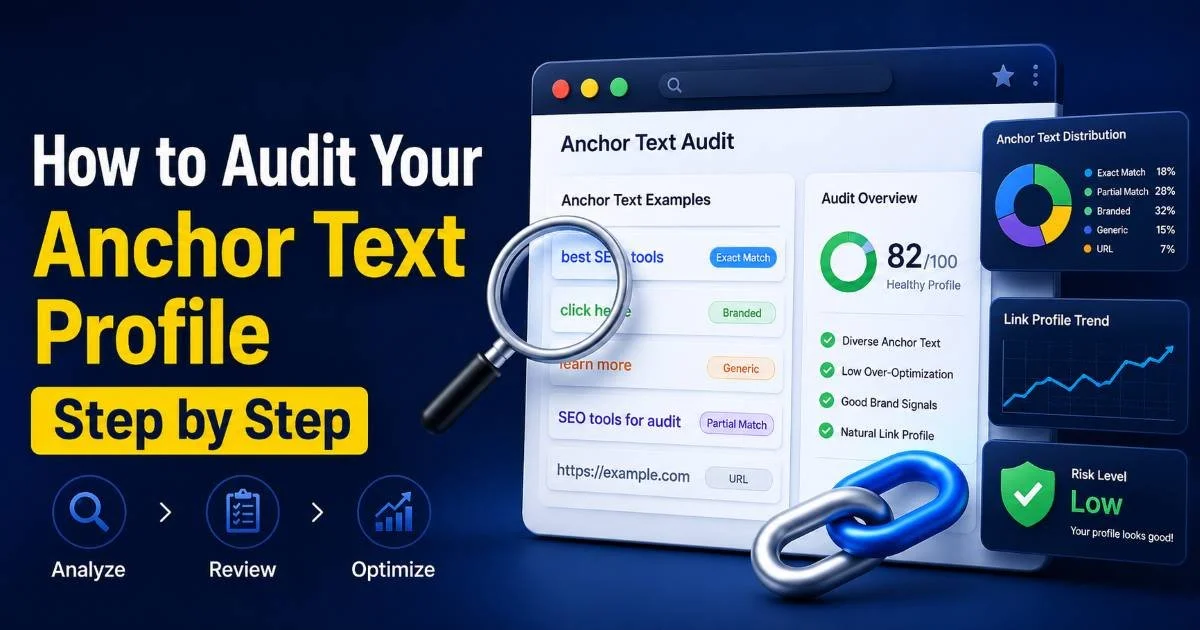
This guide walks you through a complete SEO audit of your anchor text profile, from data collection to actionable fixes. Whether you manage a single site or dozens of client campaigns, understanding what defines quality anchor text is the foundation you need before running any audit. The steps below give you a repeatable process that produces real results.
Key Takeaways
- Export your complete backlink data before analyzing anything else in your link profile.
- Classify every anchor into a defined type to spot over-optimization patterns quickly.
- Compare your anchor ratios against top-ranking competitors in the same niche.
- Flag toxic or spammy anchors immediately and add them to your disavow queue.
- Schedule recurring audits quarterly to catch distribution problems before penalties hit.
Step 1: Collect and Export Your Backlink Data
Choosing the Right Tools
Start by pulling your full backlink profile from at least two sources. Ahrefs, Semrush, and Majestic each crawl the web differently, so combining datasets gives you better coverage. Google Search Console also provides a backlink report, though it tends to be less comprehensive than third-party tools. Export everything into CSV format so you can merge and deduplicate later in a spreadsheet or database.
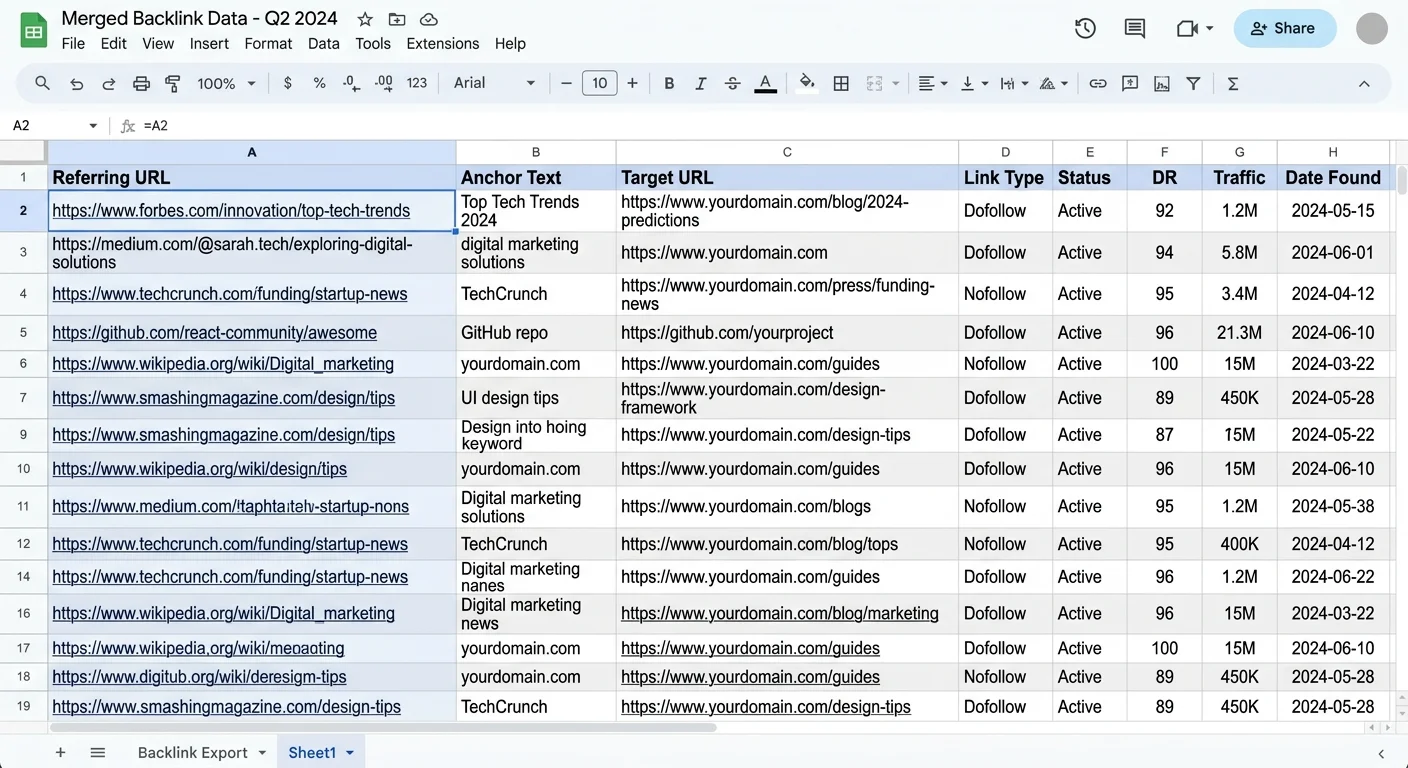
Your export should include, at a minimum, the referring URL, anchor text, target URL, domain rating or trust flow, and link status (follow vs. nofollow). If any of these columns are missing, switch to a tool that provides them. You need every data point to make informed decisions in the steps ahead. Incomplete data leads to incomplete conclusions, which means wasted effort.
Merge exports from two or more tools into a single sheet, then remove duplicate referring URLs to get your cleanest dataset.
Cleaning Your Export
Once merged, sort the data by anchor text and look for encoding errors, broken characters, or blank fields. Blank anchor text usually means an image link without an alt attribute. Categorize these separately. Remove any rows that point to 404 pages on your site since those links aren't passing meaningful value right now. At the end of this step, you should have a single, clean spreadsheet with every live backlink and its anchor text ready for classification.
Common mistakes here include skipping the deduplication step or relying on a single tool's data. One crawler might miss links that another picks up, especially for newer or smaller sites. Take the extra thirty minutes to merge properly. Your audit accuracy depends entirely on the quality of this initial dataset.
Step 2: Classify Every Anchor Text Type
Anchor Type Categories
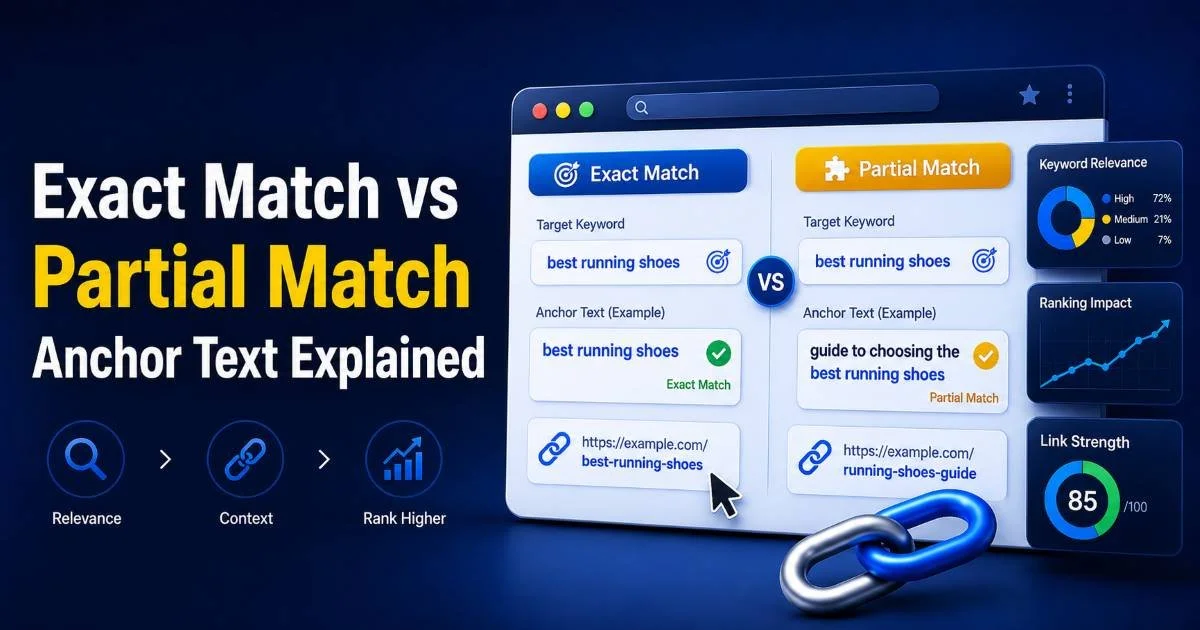
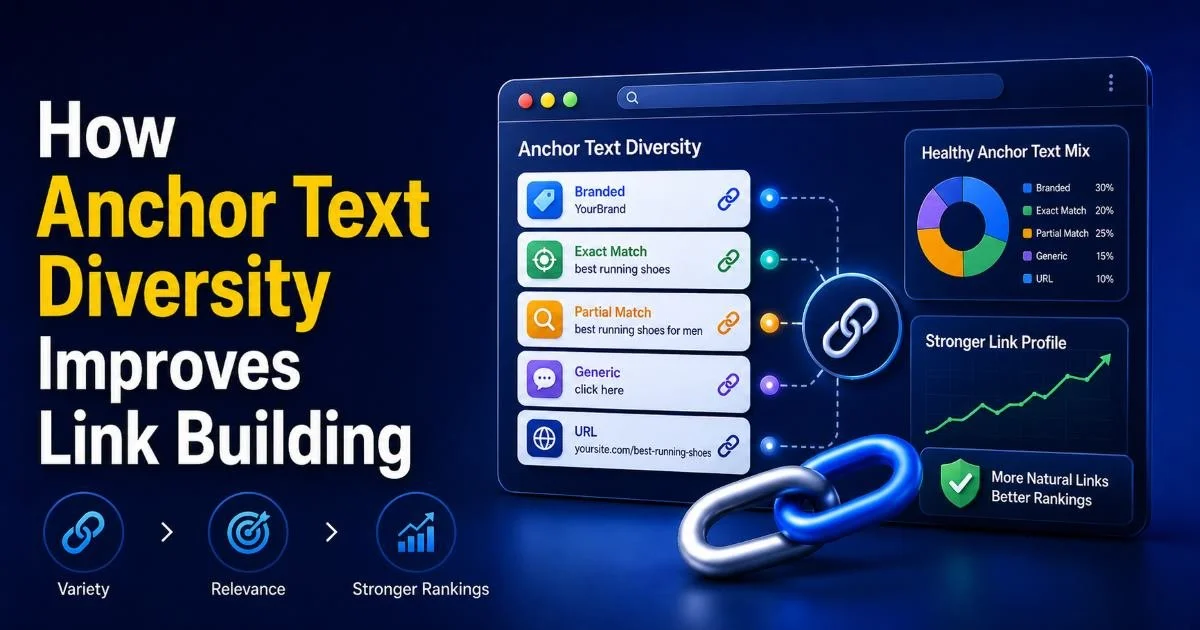
Every anchor in your profile falls into one of several categories: exact match, partial match, branded, naked URL, generic (e.g., "click here"), or miscellaneous/random. Create a new column in your spreadsheet and assign a category to each row. For large profiles with thousands of links, use formulas or scripts to automate matching against your target keyword list and brand name variations. Manual review of edge cases is still necessary, but automation handles the bulk of the work.
| Anchor Type | Definition | Example | Risk Level if Over-Used |
|---|---|---|---|
| Exact Match | Uses the target keyword exactly | "best running shoes" | High |
| Partial Match | Contains the keyword with extra words | "guide to the Best Running Shoes for men" | Medium |
| Branded | Uses your brand or domain name | "Nike" or "nike.com" | Low |
| Naked URL | Raw URL as the anchor | "https://example.com/page" | Low |
| Generic | Non-descriptive call to action | "click here" or "read more" | Low |
| Random/Other | Unrelated or gibberish text | "Tuesday update" or foreign characters | Varies |
Spotting Over-Optimization
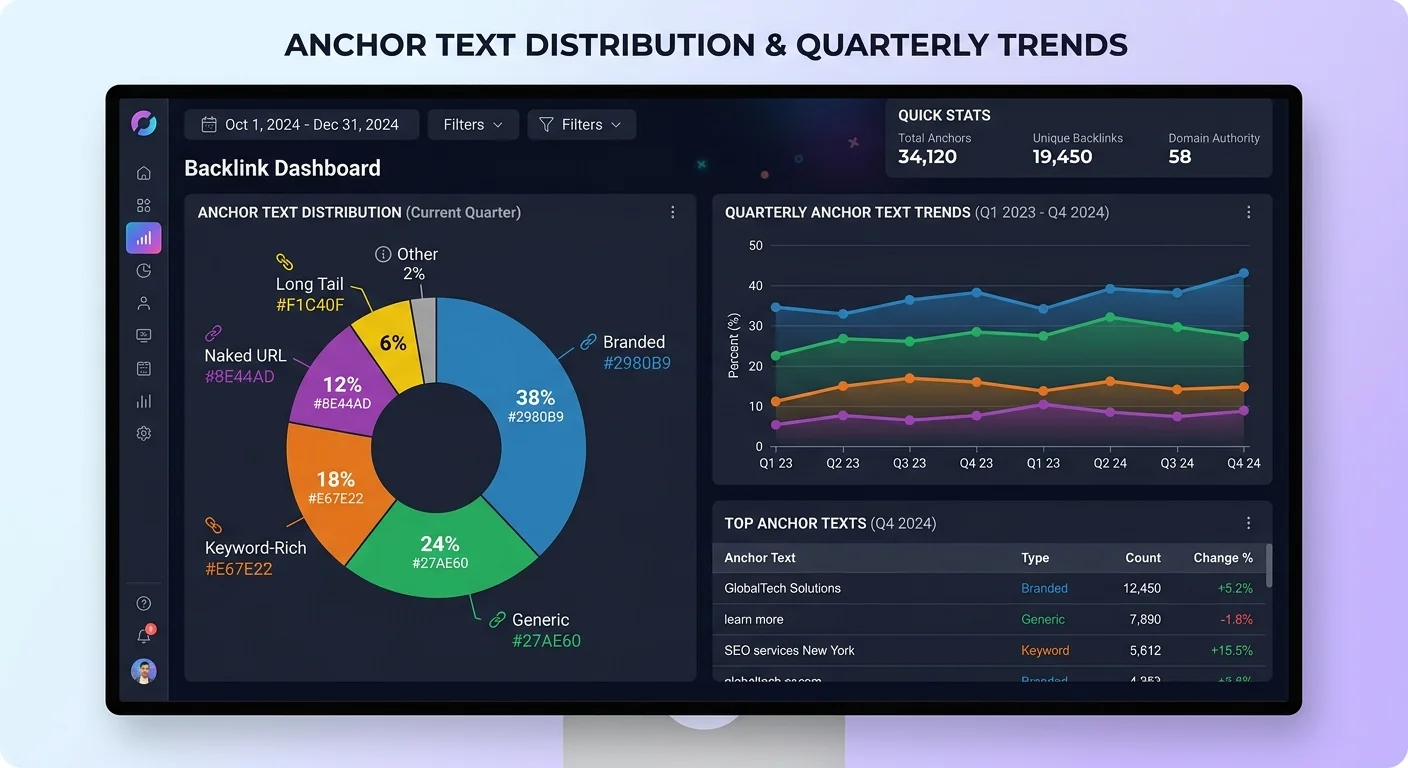
After classification, calculate the percentage each type represents. A healthy profile for most niches shows branded anchors at 30–40%, naked URLs around 20%, generic at 10–15%, partial match at 15–20%, and exact match under 5–10%. If your exact match percentage sits above 15%, that's a strong signal of over-optimization. Google's Penguin algorithm specifically targets unnatural concentrations of keyword-rich anchors, so this ratio matters enormously.
An exact match anchor ratio above 15% across your full profile is a well-documented penalty trigger — treat it as urgent.
What you should have at the end of this step is a classified spreadsheet with percentage breakdowns by anchor type. Print or export a pie chart of these percentages. This becomes your baseline — the snapshot against which you'll measure every future audit. Without this classification, you're flying blind when making link-building decisions.
Step 3: Benchmark Against Competitors and Industry Norms
Pulling Competitor Data
Your anchor text distribution doesn't exist in a vacuum. What looks over-optimized in one niche might be perfectly normal in another. Pick three to five competitors who rank on page one for your primary keywords, then run the same export-and-classify process on their backlink profiles. You don't need to analyze every single link — a sample of their top 200–500 referring domains gives you a reliable picture of their anchor text strategy and how it compares to yours.
Pay close attention to how competitors handle their money keywords. In competitive niches like finance or health, top-ranking sites often have branded anchor ratios well above 40% because they've earned organic editorial links over years. Newer sites trying to compete with aggressive exact match anchors stand out to algorithms immediately. The competitor benchmark tells you what Google considers normal for your specific keyword landscape.
Reading the Gaps
Build a comparison table showing your ratios next to each competitor's ratios. Look for categories where you diverge significantly — that's where risk lives. If competitors average 5% exact match and you're sitting at 18%, you've found a problem worth fixing. Conversely, if your branded anchor count is unusually low, it might mean you lack brand mentions and need a PR or brand-building campaign alongside your link-building efforts.
"The competitor benchmark tells you what Google considers normal for your specific keyword landscape."
At the end of this step, you should have a clear side-by-side view of your anchor distribution against the competitive set. Mark any category where your percentage deviates by more than 10 points from the average. These deviations become your priority list for step four. Don't skip this benchmarking step — your own profile data is meaningless without context from the pages actually winning in the SERPs.
Industry norms shift over time as Google updates its algorithms, so refresh competitor benchmarks at least twice a year.
Step 4: Fix Issues and Build Your Action Plan
Disavow and Outreach
Start with the worst offenders. If you identified spammy links with exact match anchors from low-quality domains, add them to a Google disavow file. For links on sites where you have a relationship — guest posts, partnerships, sponsored content — reach out and request an anchor text change. Most webmasters will update anchor text if you provide the specific edit and make it easy for them. Prioritize links from domains with trust flow below 10 or those flagged as spam by your backlink tool.
Next, adjust your future link building strategy to correct the imbalances you found. If you need more branded anchors, focus on digital PR, unlinked brand mention reclamation, and industry directory submissions. If partial match anchors are underrepresented, incorporate natural keyword variations into your guest posting guidelines. Every new link you build should move your overall distribution closer to the competitor benchmark from step three.
When requesting anchor text changes from webmasters, provide the exact HTML they should use — this dramatically increases compliance rates.
Ongoing Monitoring
A one-time audit fixes today's problems but doesn't prevent tomorrow's. Set a quarterly calendar reminder to re-run this entire process. Tools that offer AI-powered monitoring can automate parts of this workflow, alerting you when new backlinks arrive with problematic anchor patterns. The goal is to catch issues before they accumulate enough to trigger a penalty, not after your rankings have already dropped.
Document everything. Create a simple tracking sheet that logs each audit date, the anchor type percentages at that time, actions taken, and the results observed in rankings over the following weeks. This historical record becomes invaluable when diagnosing future ranking fluctuations. At the end of this step, you should have a disavow file submitted, outreach emails sent, updated link-building guidelines for your team, and a monitoring schedule locked in your project management tool.
Frequently Asked Questions
?How do I merge Ahrefs and Semrush exports without duplicate links?
?Is Google Search Console enough for an anchor text audit?
?How long does a full anchor text profile audit realistically take?
?Can branded anchors ever hurt your profile if you have too many?
Final Thoughts
Running an anchor text audit isn't a one-afternoon project you check off and forget. It's a recurring practice that keeps your link profile healthy and your rankings stable. The four steps above, collecting data, classifying anchors, benchmarking competitors, and building a fix-and-monitor plan, give you a repeatable framework that scales across any number of sites.
Start with your most important domain this week, and commit to the quarterly rhythm. Your future self, staring at stable rankings instead of penalty recovery guides, will thank you.
Disclaimer: Portions of this content may have been generated using AI tools to enhance clarity and brevity. While reviewed by a human, independent verification is encouraged.