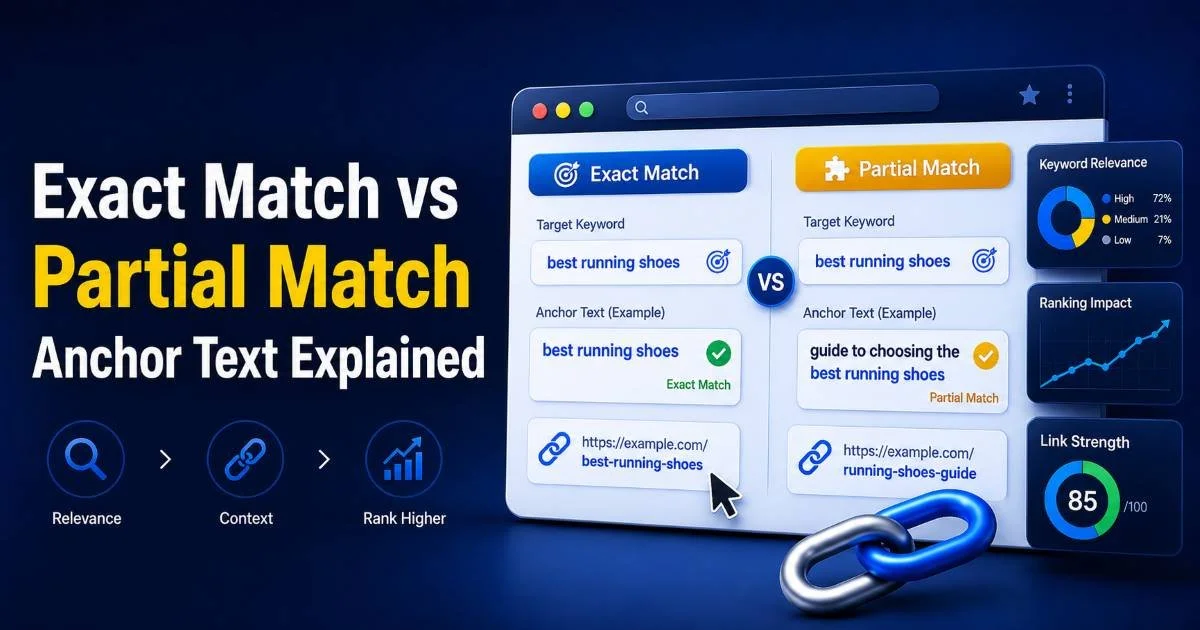
Anchor text optimization sits at the heart of every successful link-building strategy, yet most SEO specialists treat it as an afterthought.
They chase backlinks aggressively, only to realize months later that their link profile looks unnatural, dominated by exact match phrases or littered with generic "click here" anchors. Google's algorithms have grown remarkably sophisticated at detecting manipulative patterns, and a poorly constructed anchor text strategy can trigger penalties that tank your rankings overnight.
The difference between a site that climbs steadily and one that stagnates often comes down to how deliberately its anchor text was planned. Understanding what anchor text quality really means is the foundation you need before building anything. This guide walks you through a practical, step-by-step process for building a natural anchor text strategy that strengthens your backlink profile without raising red flags.
Key Takeaways
- A natural link profile mixes branded, partial match, generic, and naked URL anchors.
- Audit your existing anchors before launching any new link-building campaigns.
- Over-optimized exact match anchors remain the fastest path to a Google penalty.
- Map specific anchor types to specific pages based on their funnel position.
- Review and adjust your anchor text ratios at least once per quarter.
Step 1: Audit Your Existing Anchor Text Profile
Pull and Categorize Your Data
Before you build anything new, you need a clear picture of what already exists. Export your backlink data from Ahrefs, Semrush, or Moz, then categorize every anchor into one of six types: exact match, partial match, branded, generic, naked URL, and miscellaneous. This categorization reveals your current distribution at a glance. If you're unsure how to approach this systematically, the guide on how to audit your anchor text profile step by step breaks the entire process down.
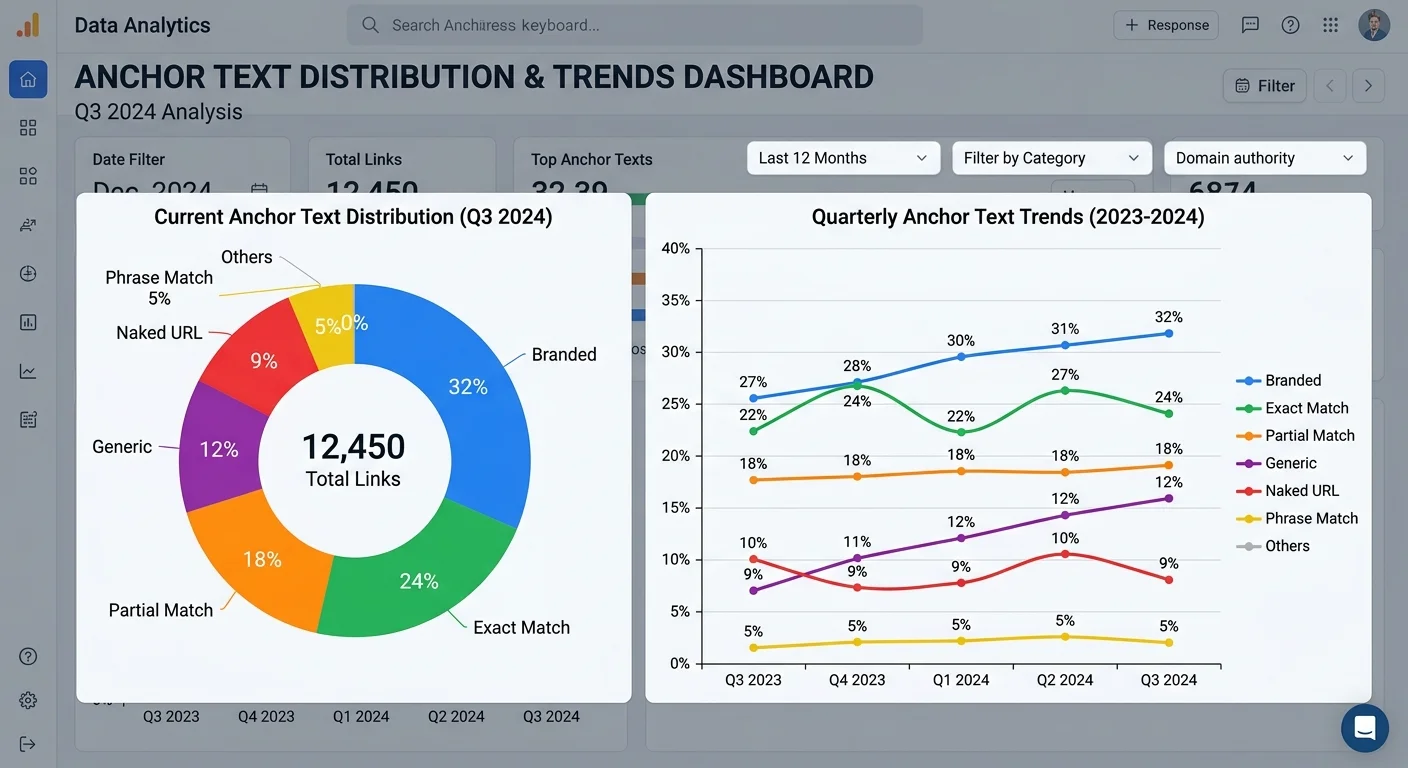
Once categorized, calculate the percentage each type represents. A healthy profile for most sites shows branded anchors comprising 30–40% of all links, with exact match sitting below 5–10%. If your numbers deviate wildly from this, say, 35% exact match, you've identified a problem that needs immediate attention. The data doesn't lie, and neither does Google's spam detection.
Spot Red Flags Early
Look for clusters of identical anchor text pointing at a single page. If fifty backlinks all say "best project management software" linking to your homepage, that screams manipulation to any algorithm. Also, watch for sudden spikes if you gained 200 links in a week and they all share similar anchors; that pattern is toxic. Understanding the differences between exact match vs partial match anchor text helps you distinguish between risky and reasonable repetition.
Ignoring anchor text distribution during an audit is like checking your blood pressure but ignoring your cholesterol — both will hurt you.
Document everything in a spreadsheet. Tag each anchor with its category, the referring domain's authority, and the target URL. This becomes your baseline. Every decision you make from here forward should reference this audit, because strategy without data is just guesswork. Think of this spreadsheet as your link-building compass; it tells you exactly where you are and where you need to go.
Step 2: Define Your Target Anchor Text Ratios
Benchmark Against Competitors
Your ideal anchor distribution isn't universal; it depends on your niche, domain authority, and competitive landscape. Pull the anchor profiles of the top three ranking competitors for your primary keywords. Note their ratios. If the top-ranking site for "email marketing tools" has 38% branded anchors, 25% partial match, and only 4% exact match, that gives you a realistic target to work toward. Competitor data grounds your strategy in reality rather than theory.
Use tools like the best SEO APIs available to pull this data at scale. Manual analysis works for a handful of competitors, but if you're managing multiple clients or large campaigns, API access lets you automate the comparison. The goal is to identify the distribution patterns that Google already rewards in your specific vertical, then mirror them with your own natural spin.
Set Your Distribution
Based on your audit and competitor benchmarks, set target percentages for each anchor type. Write them down. Pin them to your project board. These targets become the guardrails for every link you build going forward. For most commercial sites, a distribution as the one charted above works well, but adjust based on what you found in your competitive analysis.
| Anchor Type | Target Range | Example | Risk Level |
|---|---|---|---|
| Branded | 30–40% | "Anchortool" or "Anchortool.dev" | Low |
| Partial Match | 20–30% | "anchor text analysis tool" | Low-Medium |
| Generic | 10–20% | "read more" or "this resource" | Low |
| Naked URL | 10–15% | "https://anchortool.dev" | Low |
| Exact Match | 3–10% | "anchor text optimizer" | High |
| LSI/Related | 5–10% | "link profile checker" | Low |
Print your target ratio table and keep it visible during outreach. It prevents you from defaulting to your preferred keyword as anchor text every time.
Step 3: Map Anchor Types to Target Pages
Homepage vs. Inner Pages
Not every page deserves the same anchor treatment. Your homepage naturally attracts branded and naked URL anchors that people link to your brand, not to a specific keyword. Inner pages, especially blog posts and product pages, benefit from partial match and topically relevant anchors that signal to search engines what the content covers. This distinction matters because blending them incorrectly creates unnatural patterns.
Create a simple mapping document. List your top 10–15 target pages, then assign 3–5 preferred anchor variations for each one. For a blog post about anchor text diversity, your variations might include "improving anchor diversity," "mix your link anchors," and "varied anchor approach." Understanding how anchor text diversity improves link building gives you the conceptual framework to generate these variations confidently.
"The best anchor text strategies look like they weren't strategies at all — they look like natural human linking behavior."
Match Anchor Intent to Page Purpose
A transactional page selling software should attract different anchors than an informational blog post. For commercial pages, partial match anchors that include modifiers like "best," "review," or "pricing" fit naturally because that's how real people reference products. For educational content, descriptive phrases like "guide to link auditing" or "understanding anchor ratios" feel organic. Matching intent prevents the jarring mismatch that algorithms detect.
Think about how a journalist or blogger would naturally reference your page. They wouldn't write "click here for anchor text optimization, link building, SEO audit." They'd write something like "this tool helps analyze your backlink anchors" or mention your brand name. Every anchor you request during outreach should pass this gut check: would a real person write it this way? If the answer is no, rewrite it until it sounds human.
Guest post anchors tend to skew toward exact and partial match because you control the text. Counterbalance this by actively earning branded and generic anchors through PR and resource link building.
Step 4: Execute, Monitor, and Adjust Over Time
Build With Deliberate Variation
With your ratios defined and your page-anchor map in hand, start building. The key principle is deliberate variation. Never request the same anchor text twice in a row during outreach. Rotate through your approved variations, and occasionally let the linking site choose its own anchor. Those organic, unpredictable anchors add authenticity to your profile. Real link profiles are messy and imperfect, and yours should be too.
Track every link you build in your master spreadsheet. Log the date, referring domain, anchor text used, anchor category, and target URL. After every ten links, check your running ratios against your targets. If you've built seven partial match anchors in a row, your next three should be branded or generic. This real-time tracking prevents drift and keeps your SEO audit data clean from the start rather than forcing corrections later.
Quarterly Reviews and Course Corrections
Set a calendar reminder for quarterly anchor text reviews. Pull fresh data, recategorize, and compare against your targets. The link landscape shifts, competitors change strategies, algorithm updates alter what looks natural, and your own site grows. What worked last quarter might need adjustment this quarter. Treat your anchor text strategy as a living document, not a static plan carved in stone.
During each review, look for organic links you've earned naturally. These often skew toward branded and generic anchors, which is exactly what you want. Factor them into your ratios. If organic links have pushed your branded percentage above target, you have more room for partial match anchors in your next outreach wave. This adaptive approach keeps your link profile resilient against algorithmic shifts and competitor maneuvers alike.
Use automated alerts in your backlink monitoring tool to flag any new links with exact match anchors — these need the most scrutiny.
Frequently Asked Questions
?How do I fix a link profile with 35% exact match anchors?
?Is partial match anchor text safer than exact match for SEO?
?How long does a quarterly anchor text review actually take?
?Can identical anchors from high-authority sites still cause a penalty?
Final Thoughts
Building a natural anchor text strategy isn't complicated, but it demands discipline and consistent attention. Audit first, set data-driven ratios, map anchors to pages intentionally, and review quarterly.
The sites that rank well over long periods aren't the ones with the most backlinks; they're the ones with the most thoughtfully constructed link profiles. Treat your anchor text like the signal it is, and search engines will reward you for the clarity.
Disclaimer: Portions of this content may have been generated using AI tools to enhance clarity and brevity. While reviewed by a human, independent verification is encouraged.