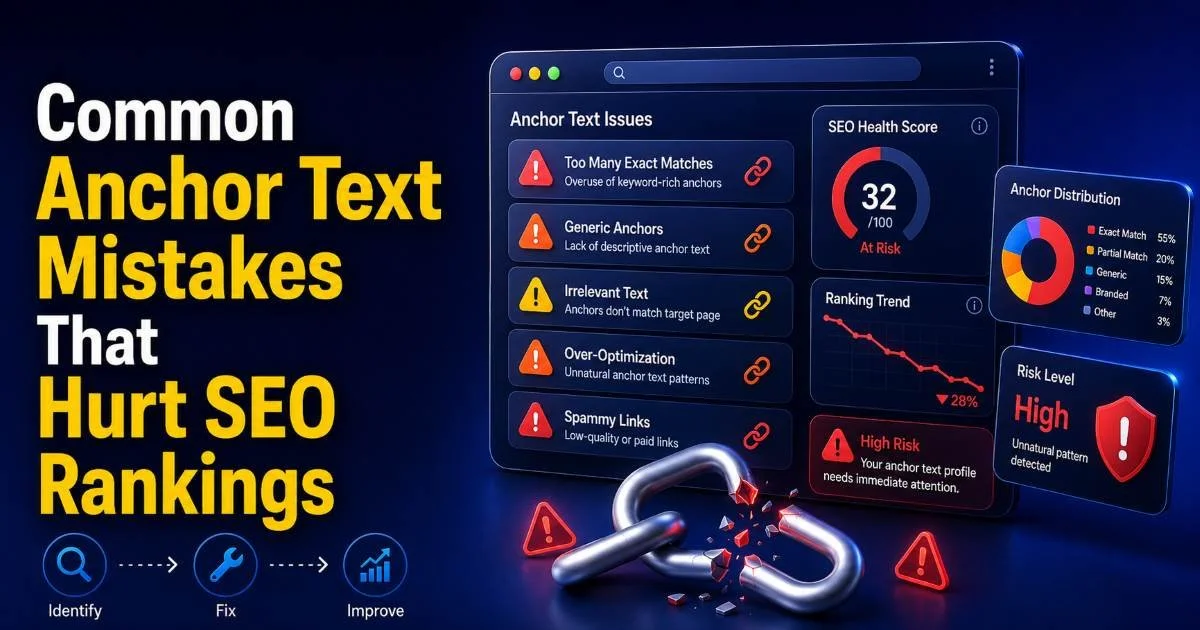
Anchor text optimization sits at the heart of any serious link-building SEO strategy, yet it's one of the areas where even experienced practitioners stumble.
A single over-optimized anchor or a pattern of generic "click here" links can quietly erode your rankings without triggering an obvious alarm. Google's algorithms have grown remarkably sophisticated at evaluating link profiles, and the penalty for getting anchor text wrong ranges from stalled growth to a full manual action.
Understanding what anchor text quality means and its best practices is the foundation, but knowing the specific mistakes to avoid is what separates strong link builders from the rest. This guide walks through the most damaging anchor text mistakes and gives you concrete steps to fix each one. Whether you're running an anchor text audit on an existing site or building a new link profile from scratch, these patterns will save you months of frustration.
Key Takeaways
- Over-optimized exact-match anchors are the fastest way to trigger algorithmic penalties.
- Generic anchors like "click here" waste link equity and provide zero topical relevance signals.
- Ignoring anchor text diversity creates unnatural patterns that Google's systems detect easily.
- Regular anchor text audits help you catch problems before they damage your rankings.
- A documented anchor text strategy prevents team members from repeating the same linking mistakes.
1. Stop Over-Optimizing With Exact-Match Anchors
What Exact-Match Over-Optimization Looks Like
Exact-match anchor text means the clickable text is the precise keyword you want to rank for, something like "best running shoes," linking to your running shoe review page. In small doses, this is perfectly natural. The problem starts when 40%, 50%, or more of your backlinks use the same exact phrase. Google's Penguin algorithm was built specifically to catch this kind of manipulation, and it remains one of the strongest ranking penalty triggers in 2024.
Consider an e-commerce site selling organic coffee. If 60 out of 100 backlinks all use "buy organic coffee online" as the anchor, that pattern screams artificial link building. No natural editorial process would produce that level of uniformity. Real journalists, bloggers, and forum users link with varied language — the brand name, a partial phrase, the URL itself, or something contextual like "this roaster's Colombian blend."
How to Fix Exact-Match Patterns
Start by exporting your current backlink data from tools like Ahrefs, Semrush, or Majestic. Group anchors by type: exact match, partial match, branded, URL, and generic. If exact-match anchors represent more than 5-10% of your total profile, you have work to do. Prioritize acquiring new links with branded or partial-match anchors to dilute the ratio, and where possible, request anchor changes from webmasters you have relationships with.
Keep a spreadsheet tracking every new link's anchor text to prevent accidental exact-match buildup across campaigns.
When reaching out for guest posts or mentions, provide the publisher with two or three anchor options rather than a single keyword-stuffed phrase. Most editors appreciate the flexibility, and it naturally produces the variation your profile needs. Think of anchor text selection as a conversation with the algorithm; you want it to sound human, not robotic.
2. Eliminate Generic and Meaningless Anchor Text
Why Generic Anchors Fail
On the opposite end of the spectrum from over-optimization sits the equally damaging habit of relying on generic anchors. Phrases like "click here," "read more," "this website," and "learn more" tell Google absolutely nothing about the destination page. While a handful of generic anchors appear in any natural link profile, a heavy concentration means you're leaving topical relevance signals on the table. Every link is a vote, and generic anchors cast that vote without specifying what they're voting for.
A link profile dominated by generic anchors can suppress topical authority scores, making it harder to rank for competitive queries.
This mistake often happens passively. Internal linking menus, footer links, and CTA buttons frequently default to generic phrasing. If your site has 200 internal links saying "read more" and only 30 using descriptive anchors, you're starving your own pages of contextual signals. Google's systems weigh internal anchor text when determining what a page is about, so these missed opportunities compound over time.
Replacing Generic Anchors With Descriptive Alternatives
Audit your internal links first since you have full control over them. Replace "click here to learn about our services" with something like "explore our best AI SEO tool recommendations." The anchor should give both users and search engines a clear preview of what they'll find at the destination. Descriptive anchors also improve accessibility for screen reader users, which is a secondary benefit worth noting.
For external backlinks, you can't always control the anchor text, but you can influence it. In outreach emails, suggest a descriptive anchor that fits naturally in the publisher's content. Instead of "link to our page here," try "you could mention it as 'anchor text analysis tools' or whatever phrasing fits your article." This subtle guidance dramatically improves the quality of anchors your link-building campaigns generate.
3. Fix Your Lack of Anchor Text Diversity
What a Healthy Distribution Looks Like
A natural link profile contains a mix of anchor types in roughly predictable proportions. Understanding how anchor text diversity improves link building is fundamental to getting this right. When every link pointing to your site follows the same pattern, whether that pattern is all exact-match, all branded, or all generic, it looks artificial. The goal is a distribution that mirrors how real people naturally reference websites.
The chart above reflects what SEO professionals generally consider a safe distribution. Branded anchors should dominate because that's how most people link — by name. Partial-match anchors (which include your keyword within a longer phrase) come second. Exact match should stay in single digits. A profile that deviates sharply from these proportions warrants immediate attention.
Building Variety Into Your Campaigns
To build a natural anchor text strategy for backlinks, create an anchor text template before launching any link campaign. This template should specify target ratios by anchor type and include a library of pre-approved variations. When multiple team members or agencies work on link acquisition, this shared document prevents everyone from defaulting to the same high-value keyword phrase.
| Anchor Type | Example | Target Range | Risk Level if Overused |
|---|---|---|---|
| Branded | "Anchor Tool" | 30-40% | Low |
| Partial Match | "anchor text analysis tool" | 20-30% | Medium |
| Exact Match | "anchor text optimization" | 3-10% | High |
| Generic | "click here," "this site" | 10-20% | Low-Medium |
| Naked URL | "anchortool.dev" | 8-15% | Low |
| Image/Other | Alt text or no anchor | 5-10% | Low |
These ranges are guidelines, not hard rules. Competitive niches like finance or health often require even more conservative exact-match ratios.
Rotate through different anchor styles across campaigns. If last month's guest posts used mostly branded anchors, this month's digital PR push might lean toward partial-match and contextual anchors. This kind of deliberate variation over time produces the organic-looking diversity that withstands algorithmic scrutiny. Track everything in your link-building spreadsheet so you can spot drift early.
"The best anchor text strategy is one that looks like no strategy at all — just people naturally referencing your content."
4. Start Running Regular Anchor Text Audits
What to Look For in an Audit
Even the best-planned link-building strategy drifts over time. Scraped links, syndicated content, and automated directories generate anchors you never requested. A quarterly anchor text profile audit catches these anomalies before they accumulate into a problem. Pull your full backlink report and sort by anchor text frequency. Any single anchor appearing on more than 10% of linking pages deserves scrutiny.
Look for sudden spikes in specific anchor text phrases. If you gained 50 links in a single week and 40 of them use the same anchor, that's likely a negative SEO attack or a low-quality link network. Also flag anchors in languages you don't operate in, anchors containing pharmaceutical or gambling terms (a classic hack indicator), and any anchors pointing to pages that no longer exist on your site.
Building an Audit Routine
Set a calendar reminder for the first week of every quarter. Export your backlink data, categorize anchors by type using a pivot table or dedicated tool, and compare the current distribution against your target ratios. Document findings in a shared report so your team maintains institutional knowledge. If you spot problematic patterns, prioritize disavowing toxic links and acquiring fresh links with corrective anchor text.
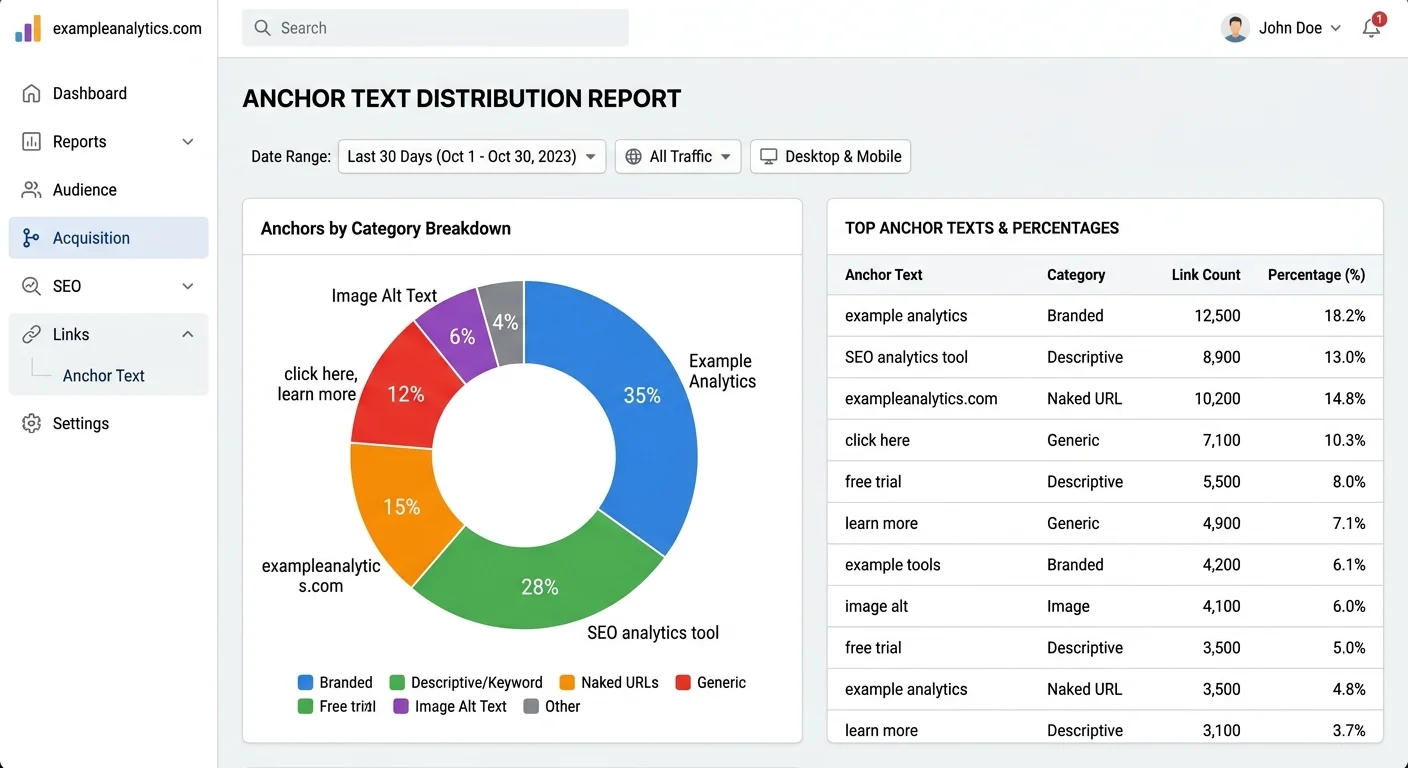
Automation helps here. Several SEO platforms offer anchor text monitoring alerts that flag sudden distribution changes. Pair those alerts with a manual quarterly review for the best coverage. The combination of automated monitoring and human analysis catches both sudden attacks and the slow drift that accumulates link by link over months. A disciplined audit process is the safety net that protects all your other link-building investments.
Export anchor text data from at least two different backlink tools to get the most complete picture — no single index catches every link.
Frequently Asked Questions
?How often should I run an anchor text audit on my site?
?Is a 5–10% exact-match ratio safe, or should I aim lower?
?How long does it take to recover after a Penguin-related penalty?
?Does replacing generic anchors like 'click here' actually move rankings?
Final Thoughts
Anchor text mistakes rarely announce themselves with dramatic ranking drops. They accumulate quietly one too many exact-match anchors here, a wave of generic links there, until the damage becomes visible in your traffic graphs.
The four steps above give you a practical framework for identifying and correcting the most common problems. Build your anchor text strategy around diversity, run regular audits, and treat every link's clickable text as a deliberate editorial choice. Your rankings will reflect the care you put into getting those small but powerful details right.
Disclaimer: Portions of this content may have been generated using AI tools to enhance clarity and brevity. While reviewed by a human, independent verification is encouraged.